Would you know how to recognise a real diamond? You may think that you have a pretty good eye, so let’s test you.
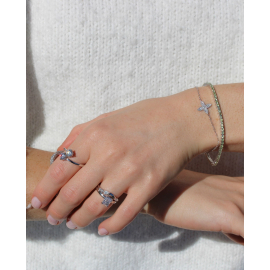
Take a look at these two rings below. Do you think they both look like real diamond rings?
Or do you think it’s obvious which one is not a diamond?
Take a guess and hold on to your answer until the end of this article, to see if you were correct.
Let’s learn more about diamonds, and most essentially - how to tell if a diamond is real.
Diamonds 101
Here is a quick refresher on diamonds.
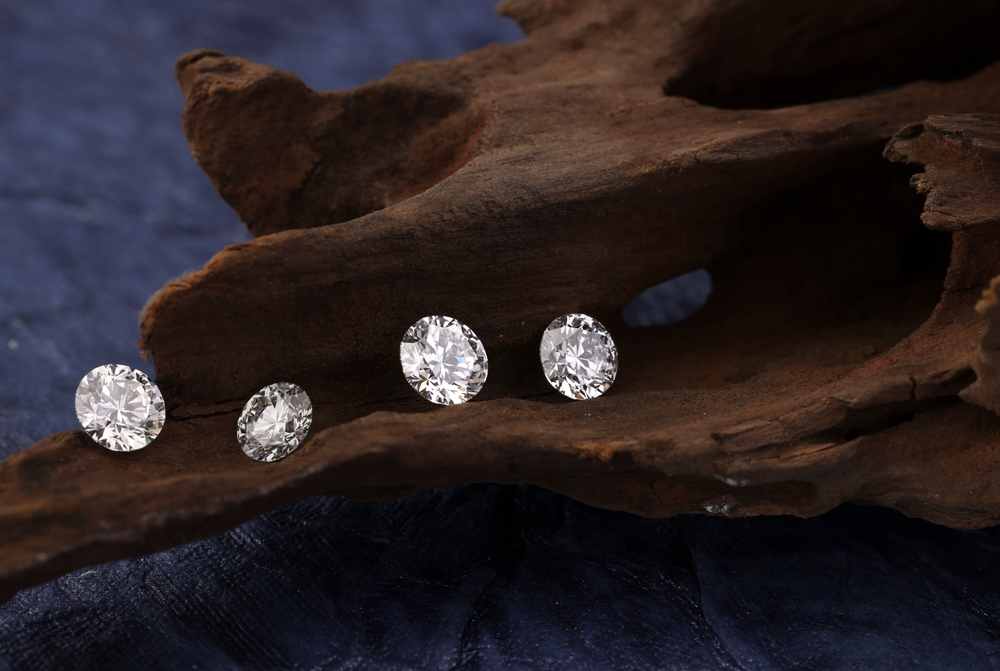
A naturally occurring mineral composed of only carbon, diamonds are formed deep within our planet’s mantle under high pressure and temperature conditions, then brought to the surface through volcanic eruptions, where they are then mined. The hardest known natural substance on our planet (10 on the Mohs scale), diamonds are commonly used in industrial cutting and drilling. Over and above that, diamonds are renowned for their brilliant optical properties, and have been used in the design of jewellery for centuries. The spectacular sparkle and unrivalled durability is what destined diamonds to become a symbol of eternal love, and why they are so often given as engagement rings and romantic gifts. Aside from the symbolic meaning - colour, clarity, cut, and carat weight are the attributes that determine the value and desirability of a singular diamond.
Diamonds - Natural And Lab-Grown
It can take billions of years to create diamonds, and for that reason lab grown diamonds have become a wonderful alternative. These artificial diamonds are made from a material that shares the same chemical composition and crystal structure as naturally occurring diamonds, so they are completely identical in terms of what they are made of. For clarification, lab grown diamonds are classed as real diamonds, they are just not natural diamonds. Apart from how they were formed, there are only a few minor differences between natural diamonds and lab grown diamonds. Unlike natural diamonds, lab grown diamonds normally don’t have any imperfections, which is why many people actually consider lab grown diamonds to be superior in quality. Lab grown diamonds are also nearly or completely colourless; while natural diamonds can be colourless, pink, yellow, blue, or green.
Your ‘Spot The Diamond’ Guide

Furthermore, a variety of other gemstones do share a similar appearance to diamonds. Some of the most common are moissanite, cubic zirconia, white sapphire, white topaz, and white zircon. To help you to understand the main distinctions, here is a short diamond guide comparing diamonds to each gemstone.
Diamond VS Moissanite
Both are highly sought after for their sparkling appearance, however, they differ significantly in terms of composition and properties. Man-made in a lab, moissanite is composed of silicon carbide which was originally discovered in meteorites. Moissanite also has a higher refractive index, exhibiting a high brilliance with more fire and sparkle than diamonds.
Diamond VS Cubic Zirconia
Cubic zirconia (CZ) is a synthetic material primarily composed of zirconium dioxide. Cubic zirconia may look extremely similar to diamonds, although they lack the refractive and dispersive power for less fire and sparkle. Cubic zirconias are also much softer and therefore less durable.
Diamond VS White Sapphire
White sapphires are composed of corundum and have a lower refractive index so they are less brilliant. Instead, white sapphires have a glass-like shine, and because they retain more internal flaws and inclusions than diamonds, they are often not as clear.
Diamond VS White Topaz
Like diamonds, white topaz is a naturally occurring mineral consisting of fluorine and aluminium silicate, however, it has considerably less hardness, brilliance, and value. With a Mohs hardness of 8, white topaz is much softer and for this reason it is more susceptible to scratches and wear.
Diamond VS White Zircon
While they possess an impressive fire, bright lustre, and a brilliance that mimics the beauty of diamonds, white zircon is composed of zirconium silicate and ranks lower on the Mohs scale at 7.5 so it is significantly less durable compared to diamonds.
Wearing Real Diamond Rings? Here’s How To Know For Sure
Now you know what separates diamonds from other similar gemstones, the next part - how to tell if a diamond is real. Say you currently have a set of real diamond rings in your jewellery box - at least you hope they are real. For peace of mind, here are some common tests you can do at home to see if your diamond ring is in fact, the real deal.
Check The Inside Of The Ring
The very first thing you should do is to check the stamp on the inside of the ring, as this will indicate if the metal is gold or platinum. If it is neither of these then it may be a cheap metal, and therefore it is highly unlikely that a real diamond would be set in it. If you see ‘CZ’ stamped, this means that it is a cubic zirconia stone and not a real diamond.
Breathe On The Diamond
Breathe on the stone, just as you would on a bathroom mirror. A genuine diamond will disperse the heat from your breath almost immediately, staying clear and clean. If the gem stays foggy for a few seconds, chances are it is not a real diamond.
Add Some Heat
Heat your ring for about half a minute, then drop it into a cup of cold water. If the stone shatters, it is a fake. An actual diamond won’t be affected by heat stress at all.
Important Note:
Be mindful of this test and others you might find during your research, the test could risk damaging the stone if it isn’t a natural diamond, so you should weigh up whether it is worth ruining the stone itself or the whole piece of jewellery during your testing process.
What About Loose Diamonds?
For loose diamonds, there are some other simple tests you can do.
The Hard Test
Real diamonds are extremely hard, and will easily cut into other materials. For this test, simply take the diamond and scratch it on an old mirror or piece of glass. If it carves into it, you probably have a diamond.
The Water Test
Simply fill a cup of water, then drop the gem into it. If it sinks quickly to the bottom, that is sure to be a real diamond because real diamonds have a high density. If the gem floats or sinks very slowly, in all likelihood you will have a fake diamond.
The Refractory Test
Diamonds refract light differently to other gemstones, and there are a few methods you can use to test this, but here is a very simple one. Take a piece of white paper and draw a small dot on it. Place your diamond over the centre of the dot, and look directly down. If you see a circular reflection in the stone, then it is not a diamond. That is because with a real diamond, you wouldn’t see the dot at all.
The Rainbow Test
Unlike other gemstones, a diamond also doesn’t reflect a rainbow. Instead, the reflection of a diamond actually shows as shades of grey, so if you see a rainbow it is either a fake or very low quality diamond. The only exception could be moissanite, which is extremely close to a real diamond. To check if a stone might be moissanite, hold it up very close to your eye and shine a penlight through it. If you are able to see a rainbow then it is moissanite and not a diamond.
Still Not Sure?
It is crucial to recognise that while home tests might be helpful, they are not completely reliable, and some tests may also damage the gem if it is not a diamond. If you are still concerned that you don’t really know how to recognise a real diamond, there are a range of specific tools which have been designed to test diamonds. You can use these or better still, see a professional jeweller or gemologist to test and confirm the authenticity of your diamond for you. Diamond testing tools include:
Jeweller’s Loupe
This is a small microscope that magnifies the diamond to identify any naturally occurring surface flaws or imperfections (called inclusions), and also any small flecks of minerals or slight colour changes which are all the hallmarks of a mined diamond.
Microscope
More powerful than a Jeweller’s Loupe, a microscope can examine the internal characteristics and surface details more thoroughly. If you were to place the diamond face down and gently move it back and forth, and then you see a slight orange flash this means it may be a cubic zirconia, or that imperfections within the diamond have been filled with cubic zirconia.
A Combination Diamond/Moissanite Tester
The best way to distinguish a diamond from moissanite is by using an electrical conductivity tester to accurately measure the electrical resistance of your gemstone. Moissanite stones have higher electrical conductivity compared to diamonds, and in the same respect diamonds are also different to other gemstones. A combination diamond/moissanite tester will indicate what the electrical conductivity is of the gemstone, making it one of the most reliable methods for authenticating diamonds.
Additional tools that professional jewellers or gemologists may use to check diamonds, include a spectroscope, polariscope, or electronic scale.
Leave it to the Gemologists
You could purchase the aforementioned diamond testing tools for yourself, however, it is crucial to recognise that while these tests might be helpful, they may not be 100% accurate unless performed by a qualified gemologist using specialised equipment. For a definitive answer, seek a reputable jeweller or gemologist and they will be able to tell you for sure if you are indeed the proud owner of beautiful and real diamond rings or jewellery.
THE REVEAL
On the left is a moissanite ring, on the right is a diamond ring.
If you guessed correctly, CONGRATULATIONS.
For those of you who struggled to tell the difference at the start of this article, given everything we have just taught you about diamonds, would you confidently know how to recognise a real diamond now?
Of course it is completely fine if you don’t. Because at Diamonds Factory, we have taken the guesswork out of your shopping experience, with our superb collection of real diamond rings.






 Unlock private sale access
 Birthday privileges
 Plus a world of exclusives, curated for you.




Would you know how to recognise a real diamond? You may think that you have a pretty good eye, so let’s test you.
Take a look at these two rings below. Do you think they both look like real diamond rings?
Or do you think it’s obvious which one is not a diamond?
Take a guess and hold on to your answer until the end of this article, to see if you were correct.
Let’s learn more about diamonds, and most essentially - how to tell if a diamond is real.
Diamonds 101
Here is a quick refresher on diamonds.
A naturally occurring mineral composed of only carbon, diamonds are formed deep within our planet’s mantle under high pressure and temperature conditions, then brought to the surface through volcanic eruptions, where they are then mined. The hardest known natural substance on our planet (10 on the Mohs scale), diamonds are commonly used in industrial cutting and drilling. Over and above that, diamonds are renowned for their brilliant optical properties, and have been used in the design of jewellery for centuries. The spectacular sparkle and unrivalled durability is what destined diamonds to become a symbol of eternal love, and why they are so often given as engagement rings and romantic gifts. Aside from the symbolic meaning - colour, clarity, cut, and carat weight are the attributes that determine the value and desirability of a singular diamond.
Diamond Side Stone Blue Sapphire Emerald Engagement Ring
$1,082
Diamond Side Stone Emerald Shaped Emerald Engagement Ring
$1,019
Diamond Side Stone Ruby Emerald Engagement Ring
$1,063
Diamonds - Natural And Lab-Grown
It can take billions of years to create diamonds, and for that reason lab grown diamonds have become a wonderful alternative. These artificial diamonds are made from a material that shares the same chemical composition and crystal structure as naturally occurring diamonds, so they are completely identical in terms of what they are made of. For clarification, lab grown diamonds are classed as real diamonds, they are just not natural diamonds. Apart from how they were formed, there are only a few minor differences between natural diamonds and lab grown diamonds. Unlike natural diamonds, lab grown diamonds normally don’t have any imperfections, which is why many people actually consider lab grown diamonds to be superior in quality. Lab grown diamonds are also nearly or completely colourless; while natural diamonds can be colourless, pink, yellow, blue, or green.
Your ‘Spot The Diamond’ Guide
Furthermore, a variety of other gemstones do share a similar appearance to diamonds. Some of the most common are moissanite, cubic zirconia, white sapphire, white topaz, and white zircon. To help you to understand the main distinctions, here is a short diamond guide comparing diamonds to each gemstone.
Diamond VS Moissanite
Both are highly sought after for their sparkling appearance, however, they differ significantly in terms of composition and properties. Man-made in a lab, moissanite is composed of silicon carbide which was originally discovered in meteorites. Moissanite also has a higher refractive index, exhibiting a high brilliance with more fire and sparkle than diamonds.
Diamond VS Cubic Zirconia
Cubic zirconia (CZ) is a synthetic material primarily composed of zirconium dioxide. Cubic zirconia may look extremely similar to diamonds, although they lack the refractive and dispersive power for less fire and sparkle. Cubic zirconias are also much softer and therefore less durable.
Diamond VS White Sapphire
White sapphires are composed of corundum and have a lower refractive index so they are less brilliant. Instead, white sapphires have a glass-like shine, and because they retain more internal flaws and inclusions than diamonds, they are often not as clear.
Diamond VS White Topaz
Like diamonds, white topaz is a naturally occurring mineral consisting of fluorine and aluminium silicate, however, it has considerably less hardness, brilliance, and value. With a Mohs hardness of 8, white topaz is much softer and for this reason it is more susceptible to scratches and wear.
Diamond VS White Zircon
While they possess an impressive fire, bright lustre, and a brilliance that mimics the beauty of diamonds, white zircon is composed of zirconium silicate and ranks lower on the Mohs scale at 7.5 so it is significantly less durable compared to diamonds.
Wearing Real Diamond Rings? Here’s How To Know For Sure
Now you know what separates diamonds from other similar gemstones, the next part - how to tell if a diamond is real. Say you currently have a set of real diamond rings in your jewellery box - at least you hope they are real. For peace of mind, here are some common tests you can do at home to see if your diamond ring is in fact, the real deal.
Check The Inside Of The Ring
The very first thing you should do is to check the stamp on the inside of the ring, as this will indicate if the metal is gold or platinum. If it is neither of these then it may be a cheap metal, and therefore it is highly unlikely that a real diamond would be set in it. If you see ‘CZ’ stamped, this means that it is a cubic zirconia stone and not a real diamond.
Breathe On The Diamond
Breathe on the stone, just as you would on a bathroom mirror. A genuine diamond will disperse the heat from your breath almost immediately, staying clear and clean. If the gem stays foggy for a few seconds, chances are it is not a real diamond.
Add Some Heat
Heat your ring for about half a minute, then drop it into a cup of cold water. If the stone shatters, it is a fake. An actual diamond won’t be affected by heat stress at all.
Important Note:
Be mindful of this test and others you might find during your research, the test could risk damaging the stone if it isn’t a natural diamond, so you should weigh up whether it is worth ruining the stone itself or the whole piece of jewellery during your testing process.
What About Loose Diamonds?
For loose diamonds, there are some other simple tests you can do.
The Hard Test
Real diamonds are extremely hard, and will easily cut into other materials. For this test, simply take the diamond and scratch it on an old mirror or piece of glass. If it carves into it, you probably have a diamond.
The Water Test
Simply fill a cup of water, then drop the gem into it. If it sinks quickly to the bottom, that is sure to be a real diamond because real diamonds have a high density. If the gem floats or sinks very slowly, in all likelihood you will have a fake diamond.
The Refractory Test
Diamonds refract light differently to other gemstones, and there are a few methods you can use to test this, but here is a very simple one. Take a piece of white paper and draw a small dot on it. Place your diamond over the centre of the dot, and look directly down. If you see a circular reflection in the stone, then it is not a diamond. That is because with a real diamond, you wouldn’t see the dot at all.
The Rainbow Test
Unlike other gemstones, a diamond also doesn’t reflect a rainbow. Instead, the reflection of a diamond actually shows as shades of grey, so if you see a rainbow it is either a fake or very low quality diamond. The only exception could be moissanite, which is extremely close to a real diamond. To check if a stone might be moissanite, hold it up very close to your eye and shine a penlight through it. If you are able to see a rainbow then it is moissanite and not a diamond.
Still Not Sure?
It is crucial to recognise that while home tests might be helpful, they are not completely reliable, and some tests may also damage the gem if it is not a diamond. If you are still concerned that you don’t really know how to recognise a real diamond, there are a range of specific tools which have been designed to test diamonds. You can use these or better still, see a professional jeweller or gemologist to test and confirm the authenticity of your diamond for you. Diamond testing tools include:
Jeweller’s Loupe
This is a small microscope that magnifies the diamond to identify any naturally occurring surface flaws or imperfections (called inclusions), and also any small flecks of minerals or slight colour changes which are all the hallmarks of a mined diamond.
Microscope
More powerful than a Jeweller’s Loupe, a microscope can examine the internal characteristics and surface details more thoroughly. If you were to place the diamond face down and gently move it back and forth, and then you see a slight orange flash this means it may be a cubic zirconia, or that imperfections within the diamond have been filled with cubic zirconia.
A Combination Diamond/Moissanite Tester
The best way to distinguish a diamond from moissanite is by using an electrical conductivity tester to accurately measure the electrical resistance of your gemstone. Moissanite stones have higher electrical conductivity compared to diamonds, and in the same respect diamonds are also different to other gemstones. A combination diamond/moissanite tester will indicate what the electrical conductivity is of the gemstone, making it one of the most reliable methods for authenticating diamonds.
Additional tools that professional jewellers or gemologists may use to check diamonds, include a spectroscope, polariscope, or electronic scale.
Leave it to the Gemologists
You could purchase the aforementioned diamond testing tools for yourself, however, it is crucial to recognise that while these tests might be helpful, they may not be 100% accurate unless performed by a qualified gemologist using specialised equipment. For a definitive answer, seek a reputable jeweller or gemologist and they will be able to tell you for sure if you are indeed the proud owner of beautiful and real diamond rings or jewellery.
THE REVEAL
On the left is a moissanite ring, on the right is a diamond ring.
If you guessed correctly, CONGRATULATIONS.
For those of you who struggled to tell the difference at the start of this article, given everything we have just taught you about diamonds, would you confidently know how to recognise a real diamond now?
Of course it is completely fine if you don’t. Because at Diamonds Factory, we have taken the guesswork out of your shopping experience, with our superb collection of real diamond rings.