
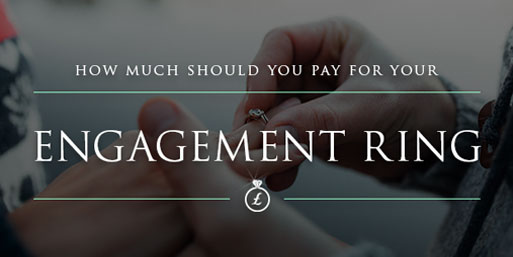
Whether you plan to purchase an engagement ring to surprise your other half with in the near future or are actually going shopping together to choose the right piece of jewelry to suit their tastes, you’ve probably been told a few old fashioned rules about how much you should pay.
There are numerous myths and tall tales around the premise of proposing which can make the whole situation a great deal more stressful. With this in mind, here are a few things to consider and ultimately, how much you should pay for that special piece of jewelry:
Myth: An engagement ring should cost the equivalent of one to three month’s wages
The average amount paid for an engagement ring in Britain is £573, according to the This is Money site. This definitely doesn’t equate to three months’ wages if you consider the national average salary in the UK is £26,500, which comes in at £1,766 after tax and amounts to £5,298 over three months! Now, that’s a pricey piece of jewelry!
It is believed that the commonly referred to ‘one-month rule’ was historically introduced by jewelers in the 50s to encourage bigger spending when it came to diamond jewelry – diamond manufacturer De Beers in particular, are said to have encouraged the craze for big, expensive diamond rings to be gifted on proposal and are the reason why this is still tradition today. Either way, whether you adopt the one-month or three-month rule, you’ll be spending a lot of money.
Myth: You have to buy a white diamond
While a white diamond ring is a popular choice, more and more people are getting braver when choosing their precious stones and settings. Black diamonds, for example, are being seen more and more in engagement rings and our selection of enhanced black diamond rings are easily affordable alongside the usual white diamonds on offer.

Myth: The bigger the diamond the more expensive the ring
The size of a diamond does not determine its worth and therefore it’s important not to simply opt for the biggest diamond in the store when making your choice. If you’re looking for quality, expect to pay a little more and more than likely for a smaller diamond. When it comes to discerning which diamond is the best choice, refer to the 4 C’s – Clarity, Color, Carat and Cut.
So, how much should I pay for an engagement ring?
To put it simply: It’s 100% up to you! You don’t have to stick to a strict figure or play by any rules, it’s all about choosing something you know your partner will love and that you can comfortably afford.
What can I get for the average ring price?
As noted above, the UK average paid for an engagement ring is around £573 and you can definitely purchase a stunning piece of jewelry for this price.

?
For example, a Princess diamond engagement ring is an elegantly timeless design to get down on one knee with. You can purchase a 9K white gold ring, featuring a beautiful 0.30 carat diamond with clarity in VS2 (featuring tiny inclusions/flaws) and color in G (near colorless) for £632 right here on the site.
This might stretch that budget a little but it’s a near perfect ring for an affordable price – and over 80% cheaper than if you abided by the ‘three-month rule’.
Here at Diamonds Factory, we offer a huge range of stunning engagement rings to suit all tastes and budgets. Take some time to browse these and find the perfect engagement ring to propose with!







 Unlock private sale access
 Birthday privileges
 Plus a world of exclusives, curated for you.


Whether you plan to purchase an engagement ring to surprise your other half with in the near future or are actually going shopping together to choose the right piece of jewelry to suit their tastes, you’ve probably been told a few old fashioned rules about how much you should pay.
There are numerous myths and tall tales around the premise of proposing which can make the whole situation a great deal more stressful. With this in mind, here are a few things to consider and ultimately, how much you should pay for that special piece of jewelry:
Myth: An engagement ring should cost the equivalent of one to three month’s wages
The average amount paid for an engagement ring in Britain is £573, according to the This is Money site. This definitely doesn’t equate to three months’ wages if you consider the national average salary in the UK is £26,500, which comes in at £1,766 after tax and amounts to £5,298 over three months! Now, that’s a pricey piece of jewelry!
It is believed that the commonly referred to ‘one-month rule’ was historically introduced by jewelers in the 50s to encourage bigger spending when it came to diamond jewelry – diamond manufacturer De Beers in particular, are said to have encouraged the craze for big, expensive diamond rings to be gifted on proposal and are the reason why this is still tradition today. Either way, whether you adopt the one-month or three-month rule, you’ll be spending a lot of money.
Myth: You have to buy a white diamond
While a white diamond ring is a popular choice, more and more people are getting braver when choosing their precious stones and settings. Black diamonds, for example, are being seen more and more in engagement rings and our selection of enhanced black diamond rings are easily affordable alongside the usual white diamonds on offer.
Myth: The bigger the diamond the more expensive the ring
The size of a diamond does not determine its worth and therefore it’s important not to simply opt for the biggest diamond in the store when making your choice. If you’re looking for quality, expect to pay a little more and more than likely for a smaller diamond. When it comes to discerning which diamond is the best choice, refer to the 4 C’s – Clarity, Color, Carat and Cut.
So, how much should I pay for an engagement ring?
To put it simply: It’s 100% up to you! You don’t have to stick to a strict figure or play by any rules, it’s all about choosing something you know your partner will love and that you can comfortably afford.
What can I get for the average ring price?
As noted above, the UK average paid for an engagement ring is around £573 and you can definitely purchase a stunning piece of jewelry for this price.
?
For example, a Princess diamond engagement ring is an elegantly timeless design to get down on one knee with. You can purchase a 9K white gold ring, featuring a beautiful 0.30 carat diamond with clarity in VS2 (featuring tiny inclusions/flaws) and color in G (near colorless) for £632 right here on the site.
This might stretch that budget a little but it’s a near perfect ring for an affordable price – and over 80% cheaper than if you abided by the ‘three-month rule’.
Here at Diamonds Factory, we offer a huge range of stunning engagement rings to suit all tastes and budgets. Take some time to browse these and find the perfect engagement ring to propose with!